

Best Mattress for Scoliosis in Canada: Complete Guide (2026)
|
|
Time to read 21 min
|
|
Time to read 21 min
With 76% of scoliosis patients reporting poor sleep quality, choosing the best mattress for scoliosis isn't just about comfort — it's a real health decision. A well-suited mattress can improve spinal support, reduce pressure points, and lead to less pain upon waking. Here's what actually works for side sleepers, back sleepers, and stomach sleepers alike.
|
Mattress |
Type |
Height |
Firmness Options |
Best For |
Price |
|---|---|---|---|---|---|
|
Sombrio |
All-Latex |
7" |
Soft, Medium, Firm, Extra Firm |
Mild scoliosis, consistent all-latex support |
Starting at $1,449 |
|
Galiano |
All-Latex |
10.5" |
Customizable per side |
Couples with different needs, moderate curves |
Starting at $2,399 |
|
Cumberland |
Hybrid Mattress |
12.5" |
Medium firm feel |
Moderate-to-severe scoliosis, pressure relief + support |
Starting at $2,149 |
|
Goldstream |
Hybrid Mattress |
9" |
Medium firm feel |
Budget-friendly hybrid support |
Starting at $999 |
|
Qualicum |
Hybrid (Tufted) |
11" |
Firm, supportive feel |
Traditional tufted construction, firm support |
Starting at $1,949 |
When looking for the best mattress for scoliosis in Canada, you want a mattress that combines proper spinal alignment with soothing pressure relief across the full sleep surface---including good edge support. Every mattress for scoliosis on our list uses 100% Natural Talalay Latex — a material that provides responsive support without the drawbacks of traditional memory foam. Here's a closer look at each one.
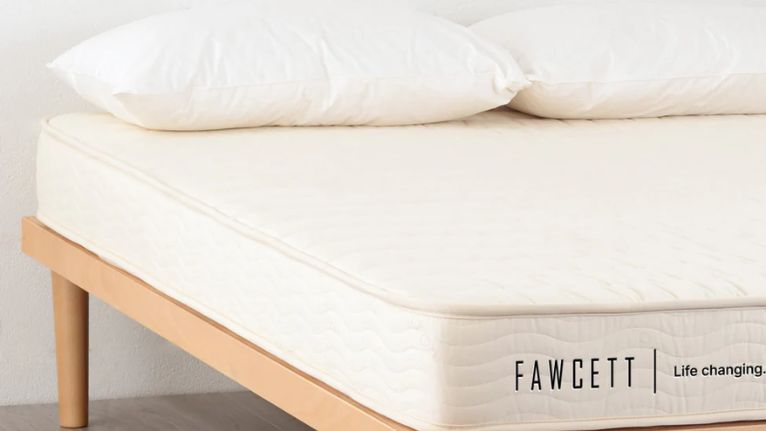
The Sombrio is built around a 6" core of 100% Natural Talalay Latex with four firmness options---soft, medium firm, firm, and extra firm. It's fully reversible, meaning you can flip it to distribute wear evenly and extend its life well beyond the typical mattress lifespan.
What makes it stand out: Four distinct levels on the firmness scale let you match support to your specific curve severity. The fully reversible design means the mattress wears evenly over time — a real advantage when scoliosis creates uneven pressure points that break down other mattresses faster. The latex foam layers provide consistent pressure relief from edge to edge, and the organic materials offer cooling features that synthetic foam layers can't match.
Best for: People with mild scoliosis (Cobb angle under 25°) who want the best mattress for consistent, responsive support. This is also a strong pick for scoliosis patients in post-surgery recovery — start with a firm mattress during healing, then use the comfort exchange for a softer firmness as you recover. Works well for side sleepers and back and stomach sleepers alike, with multiple firmness options to match your sleeping position.
Price range: Starting at $1,449 (Single) to $2,599 (King).
Sizes: Single, Single XL, Double, Queen, King, California King, custom sizes available
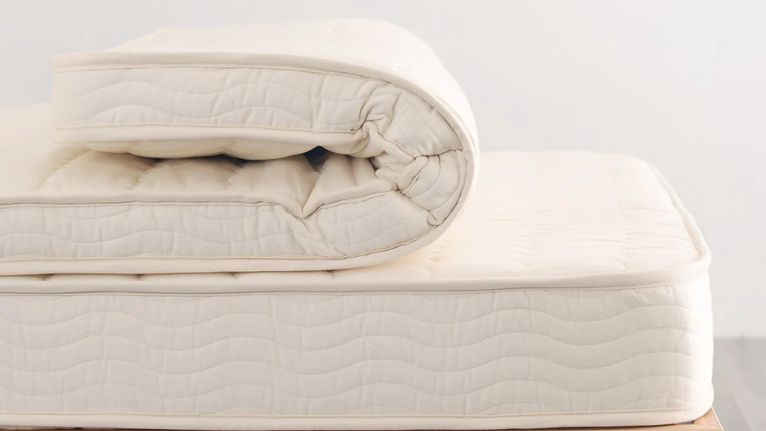
The Galiano uses a two-component design — a 3" topper on a 6" base, both made from 100% Natural Talalay Latex. The real draw is side-specific firmness at no extra cost. Each half of the best mattress for couples with scoliosis can be configured to a different firmness level, promoting proper spinal alignment for both sleepers.
What makes it stand out: If your partner sleeps fine on a medium firm but your scoliosis needs a firm mattress, the Galiano handles both without compromise. No zipper seam running down the middle, no separate mattresses pushed together. The latex foam layers in each component deliver soothing pressure relief, and the natural open-cell structure provides cooling features without gels or chemicals. Motion isolation is also strong — when your partner moves, you won't feel motion transfer across the bed. Edge support remains consistent from centre to edge.
Best for: Couples where one partner has scoliosis and needs different support. Also well suited for side and back sleepers with moderate curves, where you want the option to fine-tune firmness after sleeping on it. The multiple firmness options make this the best mattress for scoliosis when two people share a bed.
Price range: Starting at $2,399 (Single) to $4,799 (King)
Sizes: Single, Single XL, Double, Queen, King, California King, custom sizes available
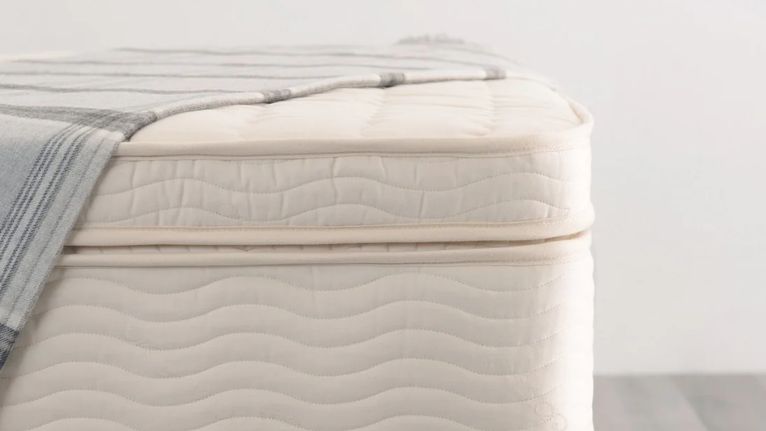
The Cumberland pairs 3" of Natural Talalay Latex with 8" of individual pocketed coils. At 12.5", it's the tallest hybrid mattress in the Fawcett lineup and delivers a combination of latex pressure relief on top with deep coil support underneath.
What makes it stand out: The pocketed coils provide a zoned support system that responds to each part of your body independently — helpful when scoliosis means your spine doesn't distribute body weight evenly across your body. The 3" thick comfort layer of latex cushions pressure points at the shoulders and hips without the sinking and heat buildup of a memory foam layer. This hybrid mattress also delivers cooling features through the open-cell latex foam layers and breathable organic cotton ticking.
Best for: People with moderate-to-severe scoliosis who want the best mattress combining responsive pressure relief with deep, robust support.
Price range: Starting at $2,149 (Single) to $4,249 (King)
Sizes: Single, Single XL, Double, Queen, King, California King, custom sizes available
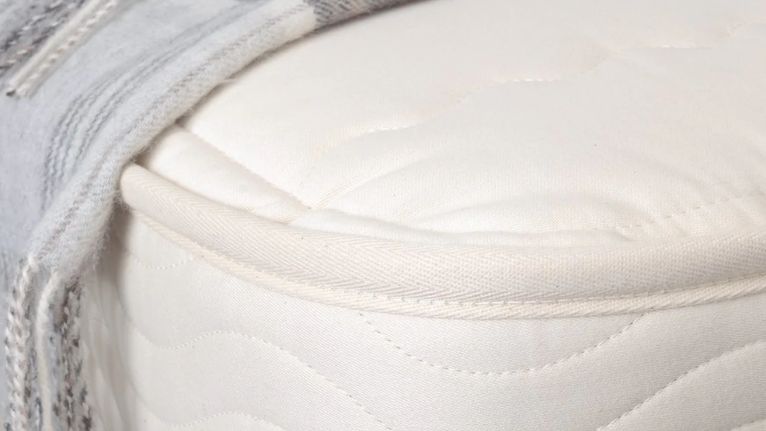
The Goldstream is a 9" hybrid mattress combining 2" of Natural Talalay Latex with pocketed coils. It's the most affordable mattress entry point into a latex hybrid mattress for scoliosis.
What makes it stand out: You get the core benefits of natural latex---cooling features, responsive pressure relief, no off-gassing---at a lower price point than the Cumberland. The pocketed coils still provide strong motion isolation, reduced motion transfer, and good edge support, even when you share a bed. For scoliosis patients, the medium firm feel provides spinal alignment support without being overly rigid. This is the best mattress for scoliosis at an affordable price, without cutting corners on materials or foam layers.
Best for: Budget-conscious shoppers with mild-to-moderate scoliosis who want hybrid mattress support without paying for a premium build.
Price range: Starting at $999 (Single) to $1,799 (King)
Sizes: Single, Single XL, Double, Queen, King, California King, custom sizes available
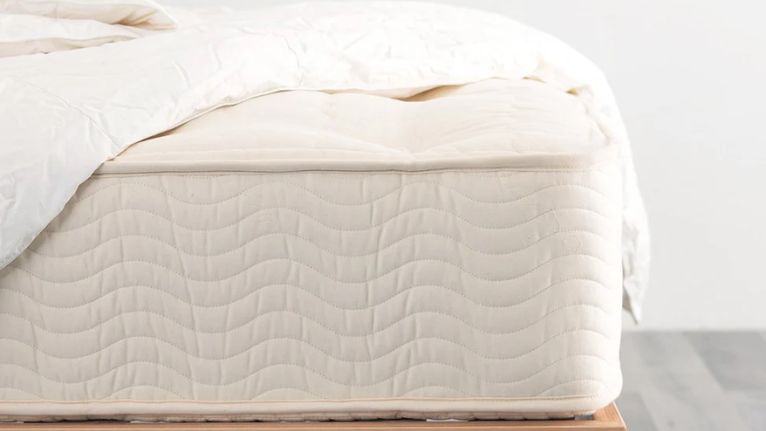
The Qualicum is a fully reversible tufted hybrid mattress — buttons are sewn throughout the mattress to lock the layers together. This traditional construction method creates a firm mattress with a unified feel and excellent edge support.
What makes it stand out: Tufting prevents the individual foam layers from shifting over time, which means more consistent spinal alignment year after year. The reversible design doubles the usable sleep surface, extending the mattress's lifespan. Edge support is strong due to the tufted construction, and the pocketed coils provide reliable motion isolation and robust support across the full surface.
Best for: People with scoliosis who prefer a firmer mattress type on the firmness scale. Particularly suited to back and stomach sleepers with lumbar curves who need a stable, flat sleep surface for proper spinal alignment. Note: the Qualicum is not eligible for the comfort exchange due to its tufted construction.
Price range: Starting at $1,949 (Single) to $3,749 (King)
Sizes: Single, Single XL, Double, Queen, King, California King, custom sizes available
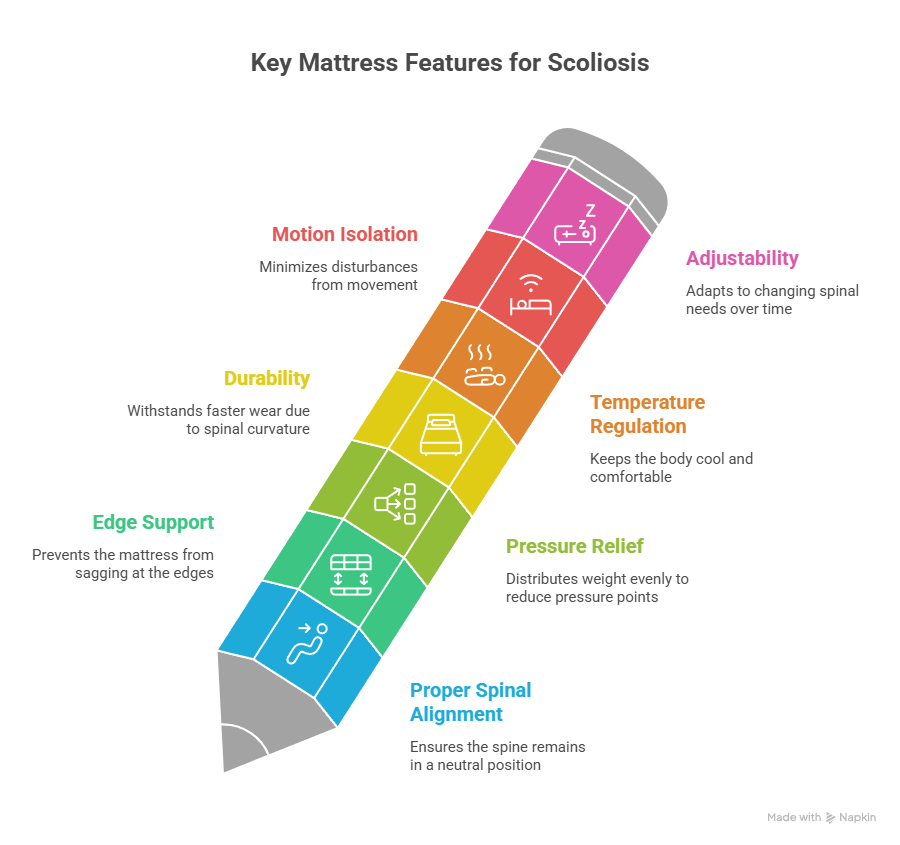
Finding the best mattress for scoliosis means looking beyond marketing claims and focusing on the mattress features that actually matter for a curved spine. Here's what to prioritize.
Scoliosis creates an asymmetric spine, causing your body to distribute weight unevenly across the mattress. A mattress that feels great for someone with a straight spine may create painful pressure points for you. Look for materials that respond to different areas of your body independently — pocketed coils and natural latex both do this well, promoting proper spinal alignment regardless of your sleeping position.
The best mattress for scoliosis provides a zoned support system rather than uniform mattress firmness. This means robust support where your body weight is heaviest (hips and shoulders) and softer pressure relief where you need it most. The right mattress firmness depends on your body weight, sleep position, and the severity of your curves. A medium-firm mattress for scoliosis should keep your spine in a neutral position, whether you sleep on your side or your back.
Edge support matters more than most people realize when shopping for a mattress for scoliosis. Because scoliosis patients change sleeping positions more frequently during the night, you need consistent support all the way to the edge. Poor edge support means the mattress sags at the edges when you sleep near the perimeter, which can throw off your spinal alignment.
Hybrid mattresses with pocketed coils generally deliver the best edge support. Memory foam mattresses tend to compress near the edges, reducing the usable sleep surface. If you share a bed, good edge support gives both side sleepers and back sleepers more room and prevents the "rolling toward the middle" effect. A mattress for scoliosis with strong edge support means you can sit on the edge to get in and out of bed without the mattress collapsing under you---helpful when back pain makes that transition harder. Good edge support also means side sleepers can sleep closer to the perimeter without losing pressure relief or spinal alignment.
Scoliosis creates specific pressure points at the apex of your curve, at the shoulders, and at the hips. The best mattress for scoliosis provides soothing pressure relief at these contact points while maintaining spinal alignment.
A thick, natural latex comfort layer delivers the ideal combination of pressure relief and support. Unlike memory foam, which provides pressure relief by sinking deeply, latex pushes back with responsive support. This means pressure points get cushioned without compromising your spinal alignment.
For side sleepers especially, pressure relief at the shoulder and hip is critical---a mattress without adequate pressure relief will cause hip and shoulder pain that compounds the discomfort from scoliosis. Side and back sleepers both benefit from a mattress that provides pressure relief while maintaining a comfortable position throughout the night.
Research shows scoliosis patients experience concentrated pressure at the curve's apex, which accelerates mattress degradation. Where a typical mattress might last 7–10 years, you may notice sagging and loss of support in as few as 5–7 years with synthetic foam layers. Natural Talalay Latex is highly resilient and maintains its firmness for 15–20 years, even under asymmetric pressure. Flippable designs like the Sombrio help distribute wear evenly.
Many scoliosis patients report that memory foam heat retention disrupts their already fragile sleep. One long-time scoliosis patient on a National Scoliosis Foundation forum described removing her memory foam topper entirely after body heat and hot flashes made the heat retention unbearable. A latex mattress has an open-cell structure that breathes — paired with Joma Wool® and organic cotton ticking, it delivers cooling features and temperature regulation without gels, gel-infused foam, or chemical cooling agents.
A cooling mattress isn't just nice to have for scoliosis patients — it's a necessity. When you're already waking up due to pain, adding overheating from trapped warmth in synthetic foam layers compounds the problem. The best mattress for scoliosis uses natural materials with built-in cooling features rather than relying on gel-infused foam, which loses effectiveness over time.
If you share your bed, motion isolation should be high on your list of mattress features. Scoliosis patients tend to change sleeping positions more often during the night, and poor motion isolation means every movement wakes your partner.
Pocketed coils excel at motion isolation because each coil moves independently, absorbing motion transfer rather than spreading it across the bed. An innerspring mattress with connected coils has poor motion isolation — every movement travels across the entire sleep surface.
Natural latex also reduces motion transfer naturally due to its responsive cell structure. For the best motion isolation in a mattress for scoliosis, look for a hybrid mattress with individually wrapped pocketed coils and a latex comfort layer. Strong motion isolation combined with good edge support means both sleepers get undisturbed rest.
Scoliosis is often progressive — especially in adults over 60, where prevalence can reach 68% due to degenerative changes (Journal of Children's Orthopedics, 2013). What works for your back today may not work in five years. A mattress with multiple firmness options, a comfort exchange program, or a modular design gives you room to adjust.
This is where generic mattress advice falls apart.
A widely cited 2003 study published in The Lancet found that medium-firm mattresses reduced chronic pain significantly more than firm mattresses — participants on medium-firm mattresses were twice as likely to report improved sleep quality. That study changed how the entire mattress industry talks about firmness.
But here's the problem: that study focused on general back pain, not scoliosis specifically. And across scoliosis forums, a different pattern emerges. Multiple people with moderate-to-severe curves (50–85 degrees) report that a firm mattress works better for them, contradicting the consensus for a medium-firm mattress. Your ideal mattress firmness depends on your body weight, sleep position, and the severity of your curve — not a one-size-fits-all recommendation. Back pain from scoliosis responds differently from general back pain.
One user on a National Scoliosis Foundation forum put it this way---after trying many beds, the only mattress they could tolerate was a firm, traditional one, both before and after surgery. Another wrote that memory foam let their curve move further in the wrong direction.
There's no single firmness that works for all scoliosis. Your ideal position on the firmness scale depends on your curve severity (Cobb angle), sleeping position, and whether you've had surgery.
As a general guide:
At Fawcett, we offer four firmness levels — soft, medium, firm, and extra firm — and our 100-night comfort exchange on most models lets you adjust if your first choice doesn't feel right. We also provide a post-purchase consultation to help match firmness to your specific needs and sleeping position.
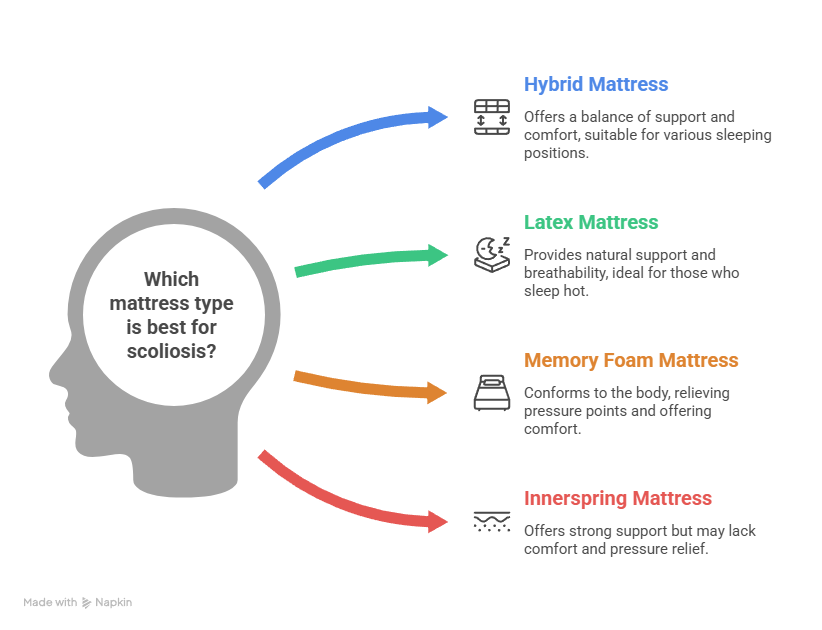
Not all mattress types perform the same for scoliosis. Here's how the main categories compare when you're looking for the best mattress for scoliosis.
A hybrid mattress combines pocketed coils with comfort layers — usually latex or memory foam. For scoliosis patients, a hybrid mattress offers the best combination of deep support, pressure relief, edge support, and motion isolation. The pocketed coils create a zoned support system, while the comfort layer provides soothing pressure relief at pressure points. Our Cumberland and Goldstream are both hybrid mattress designs that pair pocketed coils with Natural Talalay Latex — the best mattress combination for most scoliosis patients who need both support and pressure relief.
An all-latex mattress uses latex layers for both support and comfort. A latex mattress provides responsive pressure relief, natural cooling, and a 15–20-year lifespan. For scoliosis patients who want organic materials and proper spinal alignment, a latex mattress is an excellent choice. Our Sombrio and Galiano are both latex mattress designs with multiple firmness options and excellent motion isolation.
An all-foam mattress, or a memory foam mattress, uses synthetic foam layers for support and comfort. While these mattresses can provide initial pressure relief, they typically lack the edge support and robust support of hybrid or latex designs. A memory foam mattress also retains heat and develops impressions more quickly, making it a poor long-term option for scoliosis. All-foam designs with stacked foam layers offer the weakest edge support of any mattress type.
A traditional innerspring mattress uses connected coils with minimal comfort layers on top. While an innerspring mattress can provide firm support, it lacks the pressure relief, motion isolation, and spinal alignment benefits of a hybrid mattress or latex mattress. An innerspring mattress also wears out faster and offers poorer edge support than designs with individually wrapped pocketed coils. If you currently sleep on an innerspring mattress and have scoliosis, upgrading to a hybrid mattress or a latex mattress with proper spinal alignment support is worth considering.
People with scoliosis use both, but they behave very differently — and the differences matter when your spine is curved.
Natural Talalay Latex is responsive, meaning it pushes back when you press into it rather than slowly conforming to your body. For scoliosis, this matters because your body distributes weight unevenly. Latex supports heavier areas (hips) while still cushioning lighter areas (waist), creating more balanced spinal alignment and a comfortable position throughout the night.
Latex also sleeps cool due to its open-cell structure, and it doesn't develop permanent body impressions the way memory foam does. A 2025 study in Nature and Science of Sleep found that soft mattresses led to more frequent transitions to lighter sleep stages — insufficient support may cause areas like the hips to sink, increasing internal spinal pressure. Natural latex provides enough give for pressure relief without sacrificing the spinal support your body needs.
Memory foam conforms closely to your body shape, which sounds ideal, but creates real problems for many scoliosis patients. The slow response time of a memory foam layer makes it harder to change positions during the night — something scoliosis patients do more frequently. Several users on scoliosis forums describe feeling "stuck" in memory foam, unable to reposition without significant effort. A thick memory foam layer also traps warmth, reducing sleep quality.
Heat retention is the other major issue. Memory foam mattresses trap heat, and when you're already waking up due to pain, adding overheating to the mix compounds the problem. A gel-infused foam layer can slightly reduce heat, but it doesn't match the natural cooling properties of latex. For scoliosis patients who also stomach- or side-sleep and tend to run warm, memory foam can be particularly uncomfortable.
One thing we see constantly: people assume latex and memory foam are the same thing. They're not. Natural latex comes from rubber trees and is responsive, breathable, and durable. Memory foam is a synthetic, petroleum-based material that slowly conforms, retains heat, and breaks down faster. If someone told you "foam mattresses aren't good for scoliosis," they were likely talking about memory foam---not natural latex. A latex mattress uses latex foam layers made from natural rubber, while memory foam mattresses use synthetic foam layers that lack the same pressure relief and longevity.
Your mattress is the foundation, but it's not the whole picture. A few adjustments can meaningfully reduce pain and deliver improved sleep quality for a good night's rest.
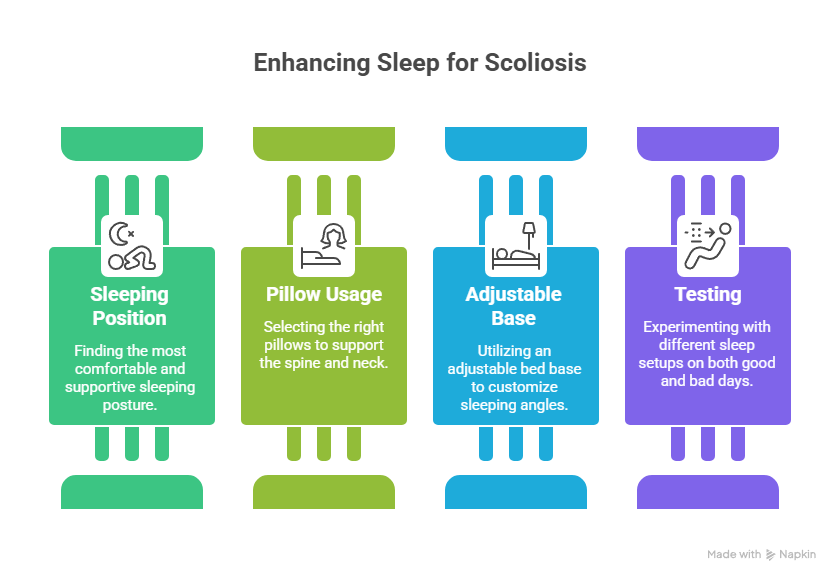
Your sleeping position has a major impact on how scoliosis affects you at night. Side sleeping is generally the best sleeping position for scoliosis — it keeps your spine aligned and allows your mattress to provide pressure relief at your hips and shoulders.
If you're a side sleeper, try sleeping on the side of your main concavity — the inward curve. This side-sleeping position lets gravity gently pull your spine toward proper alignment rather than pushing it further out of alignment. You'll need to know which direction your curve goes, so ask your physiotherapist if you're unsure.
Back sleeping also works well for spinal alignment with a pillow under the knees to reduce lumbar stress. This sleeping position reduces pressure points along the curve and is a good option for side and back sleepers who alternate positions during the night.
Stomach sleeping is generally the hardest on a curved spine. Stomach sleepers place rotational stress on the spine, which can worsen scoliosis pain. If you're a stomach sleeper, consider gradually transitioning to side sleeping — your mattress for scoliosis will perform much better in that position. Some stomach sleepers find that a medium-firm feel makes the transition easier by providing adequate support without feeling too hard.
Your pillow setup matters as much as your mattress when it comes to scoliosis. A contoured latex pillow supports proper cervical alignment for thoracic curves. For lumbar curves, a pillow between your knees reduces rotational stress on the lower spine. Unlike a pillow top, which adds surface softness, a contoured pillow provides targeted cervical support. Back sleepers benefit from a pillow under the knees to take pressure off the lumbar region and promote spinal alignment.
We carry Natural Talalay Latex pillows in moulded and contoured options designed to maintain their shape and support night after night.
Adjustable bed frames allow you to elevate your head and feet, which can reduce pressure on the curve's apex and promote proper spinal alignment. For people with breathing difficulties related to severe thoracic curves, a slightly elevated head position can make a noticeable difference for improved sleep quality. If you're considering one, contact us- we carry adjustable bases that pair with our mattresses.
If you're shopping in person, visit on a day when your back feels great and a day when it doesn't. Consumer Reports recommends spending at least 15 minutes on any mattress you're considering. Our Victoria and Nanaimo showrooms are set up for exactly this — no rush, no pressure, and our team is not on commission. Testing multiple mattress types in person is the best way to find the right mattress for your body and scoliosis.
Also read: Top Mattresses for Fibromyalgia
Neither foam nor springs alone is ideal. The best mattress for most scoliosis patients is a combination: a supportive base (pocketed coils or firm latex core) with a responsive comfort layer on top (natural latex).
Memory foam mattresses tend to lose support faster under the concentrated pressure scoliosis creates. All-foam designs with synthetic foam layers also typically lack the edge support and motion isolation that scoliosis patients need.
Pure innerspring mattresses can lack the surface comfort needed for pressure relief at the hips and shoulders. Hybrid mattresses like the Cumberland and Goldstream combine pocketed coil support with Natural Talalay Latex comfort, providing robust support, strong edge support, and soothing pressure relief.
The most comfortable sleeping position depends on your curve type, but side sleeping is generally the best starting point for scoliosis. Sleeping on your concave side — the inward curve — lets gravity assist spinal alignment rather than fight it. Side sleepers should look for a mattress for scoliosis with a thick comfort layer that provides pressure relief at the hip and shoulder.
Back sleeping works well with a pillow under the knees to reduce lumbar stress. Stomach sleeping is generally the hardest on a curved spine — stomach sleepers put excess rotational pressure on the spine, which can increase back pain. Regardless of sleep position, a mattress with a zoned support system — firmer where you need it, softer where you don't — makes the biggest difference. The best mattress for scoliosis provides adequate support in every sleep position.
Avoid mattresses that are excessively soft or that allow your hips to sink below your shoulders. This misalignment worsens pain and can accelerate curve progression over time. Also, avoid memory foam mattresses that trap heat and make repositioning difficult — scoliosis patients typically need to change positions more often during the night. A mattress without good edge support is also problematic — you need a mattress for scoliosis that supports you across the entire sleep surface.
Stay away from "one-size-fits-all" mattresses that don't offer firmness options. Scoliosis varies dramatically from person to person, and a mattress that works for a mild 15-degree curve may be completely wrong for a 50-degree curve. Avoid a pillow-top mattress with excessive surface softness that allows your spine to drift out of alignment, while a pillow-top may feel comfortable initially, it often lacks the support scoliosis patients need.
We offer a 100-night comfort exchange on most models rather than a traditional sleep trial. Here's why a comfort exchange is more useful than a standard sleep trial for scoliosis patients.
With a typical sleep trial, you'd return the mattress and start the search over. With our comfort exchange, you keep the same mattress type and swap for a different firmness, which is usually what scoliosis patients actually need. If your medium-firm feel isn't providing enough support, you can exchange it for firm or extra-firm. One exchange is permitted, and a mattress protector must be used.
Many mattress brands offer a sleep trial period of 100–365 nights. While a longer sleep trial sounds appealing, what matters for scoliosis patients isn't the length of the trial — it's whether you can adjust the mattress firmness without starting over. Our comfort exchange directly addresses the most common issue (wrong firmness), which is more practical than a sleep trial that returns your money.
A sleep trial also doesn't help you determine whether you need medium-firm or firm support — a personalized consultation does. When comparing any sleep trial to our comfort exchange, consider what actually solves the problem. No sleep trial gives you the personalized guidance that a post-purchase consultation provides.
A 2–3" memory foam topper on a firm base can provide some short-term pain relief, and many scoliosis patients on forums report that this layered approach works better than a full memory foam mattress. The firm base maintains spinal support while the topper adds surface comfort.
That said, toppers are a band-aid, not a solution. They don't address the underlying support issues of a worn-out mattress, and a memory foam topper still traps heat. A Natural Talalay Latex topper is a better option if you want to test the feel of latex before committing to a full mattress for scoliosis — it provides the same responsive pressure relief without the heat retention. Look for a latex topper with adequate support for your sleeping position.
Scoliosis affects roughly 3% of Canadians, about 1.17 million people, and the prevalence only increases with age. If you're living with scoliosis, your mattress isn't just about comfort. It's part of how you manage a condition that affects your sleep quality, your pain, and your quality of life. A good night's sleep starts with the right mattress for scoliosis.
We handcraft every mattress on Vancouver Island using 100% Natural Talalay Latex, organic cotton, and Joma Wool®. Every mattress is custom-built to your firmness needs — including side-specific firmness for couples at no extra cost.
With proper spinal alignment, pressure relief, good edge support, motion isolation, and cooling features built into every mattress for scoliosis we make, you're getting supportive mattresses designed to last 15–20 years. And with 30+ years of mattress-making experience, we're here to help you find the best mattress for your body.
Explore our mattress collection or visit our Victoria or Nanaimo showroom to try them in person. Not sure where to start? Connect with our sleep experts for a free, pressure-free consultation.
The Author: Duane Franklin
Co-Founder
A mattress maker since the age of 18, Duane honed his skills under the guidance of a master craftsman and gradually earned a reputation as Victoria's premier mattress maker. Through his experience and direct engagement with customers, he arrived at a valuable understanding of the perfect materials and methods for mattress making. Soon after, he met Ross and Fawcett Mattress was born.
Medical Disclaimer: This content is provided for informational purposes only and is not intended as medical advice. Individual sleep needs and results may vary. Always consult a qualified healthcare professional for medical concerns or conditions.


